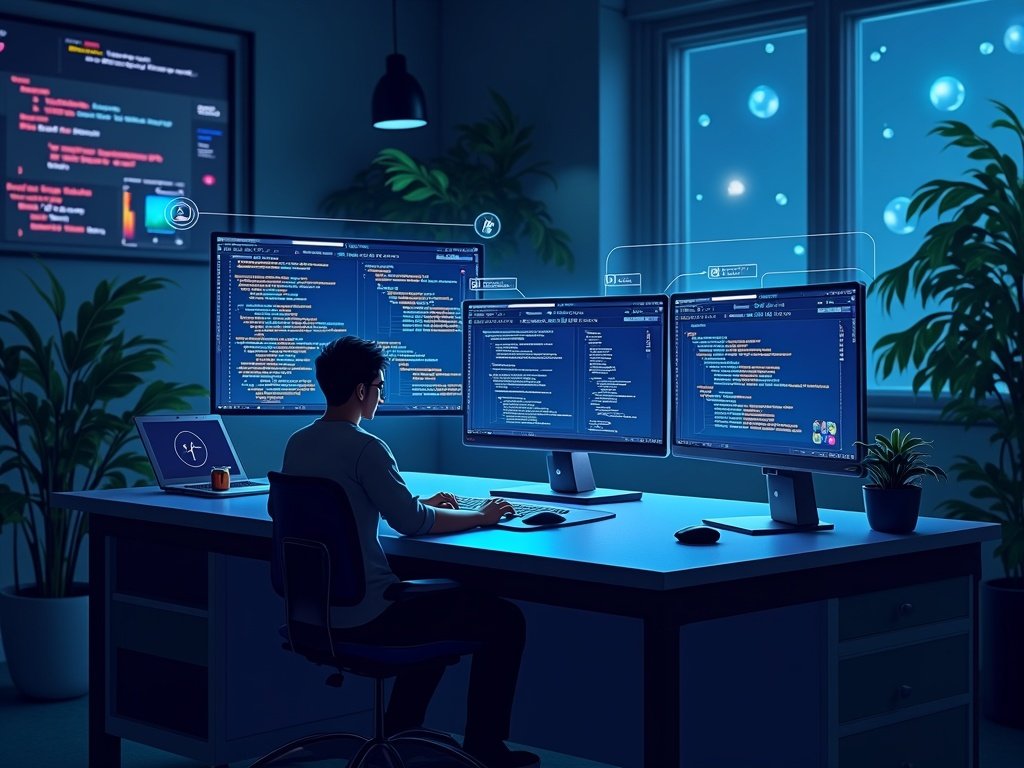
The Future of Web Development Freelancing: Projected Growth by 2026
The web development freelance industry is poised for extraordinary growth, fueled by a 16% rise in developer employment and a strategic move by companies toward specialized expertise over generalist full-time hires.
Specialized Freelancers Command High Rates
The increasing demand for specialized services opens exciting opportunities for developers positioned in high-value niches. Experts in AI integration, advanced frameworks, and emerging technologies are already commanding hourly rates between $150-$250+, leveraging artificial intelligence tools to enhance productivity and deliver exceptional results without replacing essential development skills.
The Strategic Shift Favoring Freelance Specialists
Businesses are increasingly valuing the flexibility and efficiency of hiring specialists for targeted projects over maintaining large in-house teams. This paradigm shift underscores the importance of developers honing expertise in cutting-edge, high-demand niches.
High-Value Specializations Shaping the Market
Smart freelancers will focus on areas offering the highest market value. Below are some of the top specializations set to dominate through 2026:
- AI Integration Skills: Developers skilled in embedding machine learning capabilities into systems and comprehending full-stack requirements (frontend AI interfaces and backend pipelines) will remain in high demand.
- Modern Framework Expertise: Technologies such as React, Vue, Angular, Next.js, and Nuxt.js help build high-performance, SEO-optimized single-page applications, commanding premium fees.
- Blockchain Development: Skilled developers in decentralized applications and smart contract creation, especially those comfortable with Web3 interfaces, can charge $200+ per hour.
- Performance Optimization: Experts in diagnosing slow websites, addressing performance bottlenecks, and improving Core Web Vitals work on high-priority and well-funded projects.
- Cloud-Native Development: Mastery of serverless architectures (e.g., AWS Lambda) and knowledge of containerization tools like Docker and Kubernetes are in high demand.
- Accessibility Compliance: Developers conversant with WCAG guidelines who provide accessible solutions for users with disabilities fulfill both ethical and legal demands.
Artificial Intelligence: Transcending Productivity Boundaries
AI-enhanced tools are transforming freelancers’ workflows, improving efficiency and output. These tools do not replace core skills but instead complement them:
- GitHub Copilot: Optimizes coding by suggesting code snippets, aiding repetitive tasks, and generating boilerplate code.
- AI-Based Testing Tools: Platforms such as Testim and Mabl automate test case generation and handle interface changes for quicker, reliable testing.
- Code Review AI: Tools like SonarQube and CodeGuru flag vulnerabilities, performance issues, and other coding deficiencies.
- Design-to-Code Transformation: Figma plugins now automate component generation, although still requiring professional refinement.
- AI-Driven Project Management: Tools like Monday.com and Asana offer intelligent scheduling, predictive analytics, and automate task allocations.
Building a Competitive Edge
In addition to mastering new technologies, freelancers can strategically enhance their positioning through the following:
- Industry-Specific Expertise: Developers specializing in industries such as healthcare, e-commerce, or fintech (e.g., familiarity with HIPAA or payment regulations) demand higher compensation.
- Capitalizing on Remote Work: Geographic arbitrage allows developers to work with high-cost markets remotely, ensuring alignment with their standards.
- Personal Branding: Sharing technical blogs, tutorials, and participating in open-source projects demonstrates expertise and attracts premium clients.
- Networking: Active engagement in React, Vue, or Angular communities leads to exclusive opportunities and client referrals.
- Client Relationship Management: Positioning as a trusted advisor means addressing business objectives with technology solutions and ensuring clear communication.
Long-Term Benefits and Opportunities
Freelancers focusing on building solid relationships, backed by demonstrable expertise, will frequently secure long-term contracts with growth stability. Trusted freelancers often evolve into strategic assets for companies, even leading to part-time consulting or equity partnerships in select cases.
Conclusion
The web development freelance market is booming and holds immense potential for those willing to embrace specialization while employing a strategic approach. By developing high-demand skills, leveraging technology-supported productivity tools, and honing business acumen, developers can access the most rewarding opportunities that go far beyond traditional employment paradigms.
Unprecedented Growth Signals Make 2026 the Golden Era for Web Development Freelancers
I’ve witnessed dramatic shifts in the freelance landscape, and 2026 promises exceptional opportunities for web development professionals. The U.S. Bureau of Labor Statistics projects employment for web developers and digital designers to grow 16% from 2022 to 2032, significantly outpacing the 3% average for all occupations. This explosive growth creates a perfect storm for freelance success.
The numbers tell a compelling story. By 2026, over half of the U.S. workforce will participate in freelance work in some capacity. Freelance platforms already reported a combined gross services volume exceeding $450 billion in 2023, with projections showing continued upward momentum.
Companies Favor Specialized Expertise Over Generalists
I observe a fundamental shift in hiring patterns. Companies increasingly seek freelance experts for specific, short-term projects involving niche technologies rather than hiring full-time generalists. This trend benefits skilled developers who can deliver targeted solutions quickly. Organizations recognize the value of accessing specialized talent without long-term commitments.
The AI-driven web development space exemplifies this demand for specialization. Low-code platforms and advanced UI-UX design innovations require developers with cutting-edge expertise.
Digital Transformation Fuels Market Expansion
The global web development market maintains its strong growth trajectory, driven by ongoing digitalization across industries. Every business sector requires sophisticated web solutions, creating abundant opportunities for freelance developers who can adapt to diverse client needs.

High-Demand Specializations That Command Premium Rates in 2026
The freelance landscape continues to evolve rapidly, with specific technical skills commanding significantly higher rates. Below are five critical specializations that position developers for premium pricing in today’s competitive market.
AI-Powered Development Capabilities
AI-driven web development represents the most lucrative opportunity for freelancers. Clients increasingly seek developers who can integrate large language model APIs for sophisticated chatbots, build recommendation engines that personalize user experiences, and implement AI-powered data analysis features. These skills transform static websites into intelligent platforms that adapt and respond to user behavior.
Advanced Framework Expertise
Advanced framework expertise extends beyond basic React, Vue, or Angular knowledge. Meta-frameworks like Next.js and Nuxt.js have become essential for server-side rendering and static site generation. Clients pay premium rates for developers who understand these tools’ performance optimization capabilities.
Headless Architecture and Jamstack Development
Headless architecture and Jamstack development offer another high-value specialization. With over 60% of enterprise organizations exploring headless approaches, expertise in connecting front-ends to headless CMSs like Contentful and Strapi commands excellent rates. This decoupled architecture provides the scalability and security that modern businesses demand.
WebAssembly
WebAssembly (WASM) presents a niche but highly profitable specialization. Performance-intensive applications requiring video editing, 3D rendering, or browser gaming rely on WASM for near-native performance. Developers skilled in compiling languages like Rust to WebAssembly fill a specialized market gap.
Cybersecurity and Data Privacy Expertise
Finally, cybersecurity and data privacy expertise have become non-negotiable. With regulations like GDPR and CCPA shaping development requirements, clients willingly pay premium rates for developers who understand OWASP Top 10 security practices and can implement comprehensive data protection measures. This knowledge not only protects businesses from costly compliance failures but also builds user trust.

How AI Tools Transform Freelance Productivity Without Replacing Developers
GitHub’s studies reveal that developers using Copilot complete tasks up to 55% faster, demonstrating how AI amplifies rather than replaces human expertise. These tools handle repetitive coding tasks while preserving the strategic thinking that clients value most.
Core Development Acceleration
AI coding assistants like GitHub Copilot, Tabnine, and Amazon CodeWhisperer excel at generating boilerplate code, writing unit tests, and producing documentation. They catch common errors during development, allowing me to concentrate on complex problem-solving and system architecture. AI-driven development practices streamline workflows without compromising code quality.
Debugging becomes significantly faster with tools like Sentry AI and AskCodi identifying issues and suggesting solutions. This efficiency translates directly into higher hourly earnings and faster project delivery.
Client interactions improve dramatically through AI transcription services that capture meeting details, while ChatGPT and Notion AI help craft professional proposals and project timelines. These tools eliminate communication gaps that often derail freelance projects.
Design workflows benefit from AI-powered design innovations through Midjourney and Galileo AI, which generate mockups and placeholder content. This capability proves especially valuable when working without dedicated designers.
Low-code platforms complement AI tools by handling routine development tasks, creating more time for high-value consulting and custom solutions.
The key lies in treating AI as an intelligent assistant rather than a replacement. Freelancers who master these tools maintain competitive advantages while delivering superior results to clients seeking both speed and quality.

Strategic Rate Setting and Client Acquisition Beyond Traditional Platforms
I expect significant disparities in hourly rates between generalist and specialist developers in 2026. General WordPress developers will command $60-$90 per hour, while specialists in Next.js with AI integration expertise will earn $150-$250+ per hour. Current skilled U.S.-based freelance developers average $75-$150 hourly, with this range poised to increase due to inflation and growing demand for specialized skills.
Value-Based Pricing Models
Experienced freelancers will abandon hourly billing for project-based or value-based pricing structures. This approach focuses on the ROI delivered to clients rather than time invested. A project generating $200,000 in annual revenue might warrant $20,000-$30,000 pricing, regardless of development hours required.
Building Professional Networks
Successful freelancers will shift focus from traditional platforms to personal brand development. Content marketing through blogging and social media will establish expertise and attract quality clients. LinkedIn networking and direct outreach will replace passive platform waiting.
While Upwork remains relevant, premium platforms like Toptal or Braintrust will dominate high-paying opportunities. These services vet freelancers thoroughly and match them with quality clients willing to pay premium rates.
I recommend developing specialized skills in emerging technologies rather than remaining a generalist. Low-code platforms and advanced UI/UX design expertise will command premium pricing. Start building your content marketing strategy now and establish relationships with decision-makers who value quality development work over budget pricing.

The Future is Bright for Adaptable Web Development Freelancers
The freelance web development landscape in 2026 presents unprecedented opportunities for developers who embrace change and invest in their professional growth. With a 16% projected growth in the field and increasing demand for specialized expertise, the market has never been more promising for skilled freelancers.
Master Emerging Technologies
Success will hinge on mastering emerging technologies, particularly AI integration and modern development frameworks. Freelancers who position themselves at the forefront of these innovations will capture premium opportunities while others struggle with outdated skills.
Leverage Low-Code Platforms
The rise of low-code platforms doesn’t threaten skilled developers—it creates new service categories and allows professionals to focus on high-value customization work. Smart freelancers will leverage these tools to increase productivity while delivering more sophisticated solutions.
Strategic Business Practices
Strategic business practices matter as much as technical skills. Value-based pricing, professional branding, and strong client relationships separate thriving freelancers from those barely surviving. Building expertise in specialized areas like UI/UX design innovations creates competitive advantages that command higher rates.
The Importance of Continuous Learning
Continuous learning remains non-negotiable. The developers who allocate time for skill development, experiment with new technologies, and stay connected with industry trends will discover abundant opportunities in 2026’s expanding market. Those who resist change will find themselves increasingly marginalized in an industry that rewards innovation and adaptability.

5 Frequently Asked Questions
What specific skills should I prioritize learning for freelance web development in 2026?
I recommend focusing on AI integration capabilities as the highest priority, since clients increasingly demand intelligent features in their applications. Master meta-frameworks like Next.js and Nuxt.js for their superior performance and developer experience. Gain expertise in headless CMS solutions to serve clients seeking flexible content management. Learn WebAssembly for performance-intensive applications that require near-native speed. Additionally, strengthen cybersecurity knowledge, particularly OWASP Top 10 guidelines, as data breaches become increasingly costly for businesses. AI-driven web development skills will differentiate you from competitors who stick to traditional approaches.
How much can specialized freelance web developers expect to earn in 2026?
Specialists in advanced technologies like Next.js with AI integration can command $150-$250+ per hour. General developers typically earn $60-$90 per hour, while skilled U.S.-based developers average $75-$150 per hour. Your earning potential directly correlates with your specialization depth and ability to solve complex business problems.
Will AI tools replace freelance web developers by 2026?
AI tools will serve as development partners rather than replacements. GitHub studies show these tools increase productivity by up to 55% by automating repetitive tasks. I can focus on complex problem-solving and architecture while AI handles boilerplate code generation.